
Why Math Feels Pointless...
... and what actually works (TESTED!)
4/6/20261 min read
Back in the 1990s, I remember staring at fractions and thinking one thing:
When am I ever going to use this?
I could do the work.
But it felt meaningless.
Years later, as a parent, I heard the exact same question again:
“Why do I need this? This is boring.”
But today, there’s a difference.
Kids now have options.
Games. Videos. Constant stimulation.
So when something feels pointless, they don’t push through it.
They check out.
The problem isn’t math.
It’s how it’s taught.
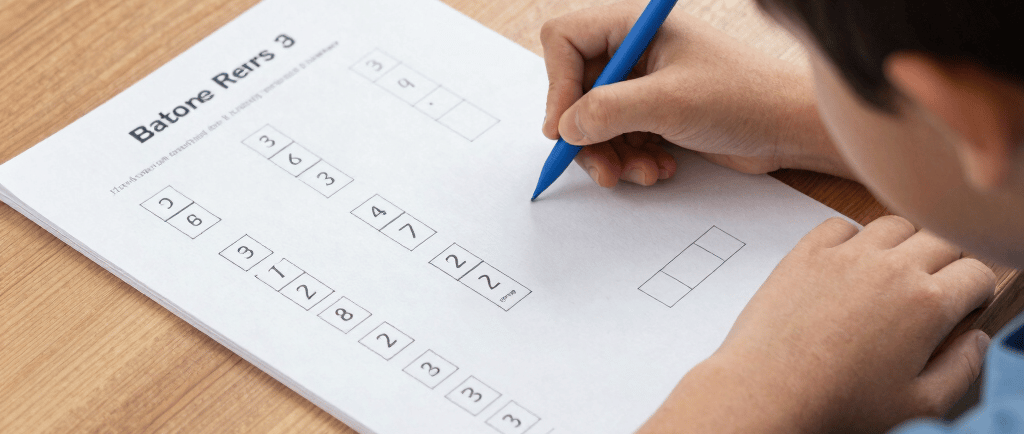
Worksheets show steps, but they don’t show purpose.
And without purpose, kids disengage fast.
What kids actually respond to is different.
They want:
challenge
decision-making
uncertainty
story
Because that’s how the brain works.
When learning is part of a story, it becomes easier to follow, remember, and care about.
Add emotion, curiosity, tension, even a bit of pressure, and attention naturally increases.
That’s why kids can remember entire movies…
but forget a worksheet from yesterday.
Now imagine this instead.
A group of students is stranded on a deserted island.
Limited food. Limited water. No room for mistakes.
Suddenly, fractions matter.
They have to decide how to split resources, how long supplies will last, and what happens if they get it wrong.
Or they’re in the Arctic, calculating survival in freezing conditions.
Or on Mars, managing oxygen and time.
Now math isn’t abstract.
It’s part of a situation.
This is where engagement changes.
Students aren’t just solving problems.
They’re moving through a mission.
Each answer pushes the story forward.
That’s the idea behind the resources Thinkerst has been building, math blended with storytelling, decision-making, and real-world context.
If you want to see how it works, you can check a free sample here:
👉 https://thinkerst.com/math-resources
The future of learning won’t rely on worksheets alone.
It will require experiences that connect:
math, reading, science, and real-world thinking.
Because that’s how kids actually learn.
And more importantly, that’s what keeps them engaged.
Thinkerst
Building future-ready thinkers through immersive learning.
Serving families and schools since 2025.
© 2025. All rights reserved.